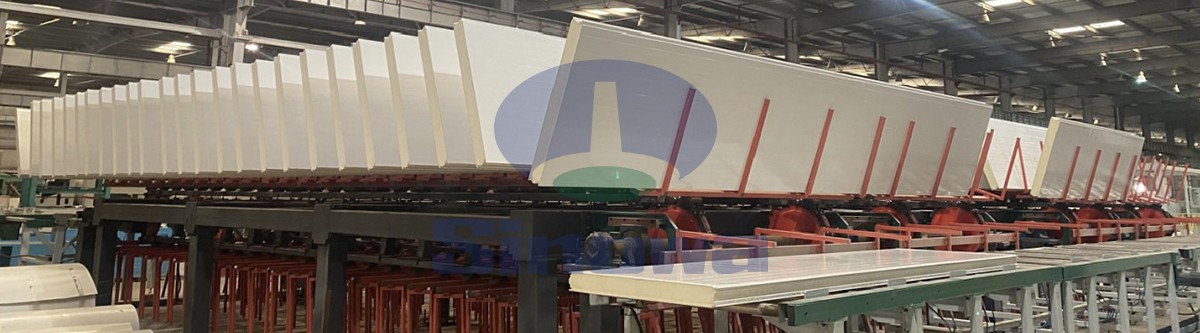
Sinowa is a well-known PU Sandwich Panel Making Machine Supplier From China, Dedicated to the research and development of high-end & high-efficiency pu sandwich panel making machine, Sinowa is comprehensively taking the leading position in terms of efficiency, automation control level, HMI, environment protection and energy consumption, with subversive designs made in some critical technological fields to procure exceptional cost performance and customer-friendly experience for the entire pu sandwich panel making machine.
The adoption of system integration technology and bus control technology accomplishes the full automatization of integrated and coordinated control of the entire pu sandwich panel making machine with accessible remote interactive communication. Ranking the first-class level in the world, it is currently the continuous pu sandwich panel line in the market taking a comprehensive lead in high performance.

Based on the continuous technological pursuit, the pu sandwich panel making machine developed by Sinowa provides you with high-efficiency industrial value. Based on China's cost advantage and our hard-working technology concept, our sandwich panel production line has a world-leading price-performance advantage. PU Sandwich Panel Making Machine can meet a variety of production needs of customers.The whole sandwich panel line design concept of modularization enables all our components to be integrated and combined at will.
Our pu sandwich panel making machine can easily automate the production of roof sandwich panel, wall sandwich panel, cold storage sandwich panel and other products by different combination and configuration selection and siple switching. The inner core layer can be polyrethane or rock wool, glass wool, an so on.

The pu sandwich panel making machine has high adaptability, which may produce various sandwich panel of the PU, PIR and rock wool systems.
We may design various products according to the customer’s requirements, including various configurations, so as to meet their demands with flexible price system.
Highly integrated and linked control system centralizes all control points at the main central center, achieving parameter linkage, fault self-diagnosis controlled by the whole continuous sandwich panel line and shipping distance control.
High-level automatic control system also saves the manpower and reduces the manpower loss for customers.

Concentrated system control is fully realized in the practice of concentrated process control so that the control system of all the movements of the parts in the pu sandwich panel making machine is integrated in one process control console with accessible remote communication to elevate the automation and reduce the allocated number of personnel for the assembly line.
The main engine with modularized design achieves the precision operation of the pu sandwich panel making machine, stable and reliable quality, less part and maintenance loss.

The whole pu sandwich panel making machine is strictly modularized in design to ensure the greatest probability for the parts to be interchangeable, making it the most cost- and energy-saving. No joining made manually, all the key processes of the parts are completed in the machining center. As soon as the parts are inspected and warehoused, they enter into the assembly process. The modularized assembly can not only greatly increase the production efficiency but, most importantly, realize quick delivery as well. It elevates the reliability of product quality to a totally new level and minimizes the influence from human factors.
The whole pu sandwich panel making machine has over 40 innovative inventions, making our products have lots of unique features and the comprehensive performance of our production line leading in the industry.

The precision servo hoisting mechanism employed by the main engine without hydraulic system makes the board thickness control flexible and the customer may conveniently change or adjust the board thickness. There will be not such troubles as hydraulic system adjustment, leakage, maintenance, etc.
High-level energy saving and protection design makes the whole pu sandwich panel making machine possible to produce around the clock throughout the year and the customer will save huge budget. In addition, the isolated heat preservation room is constructed for warming the environment. The energy saving and protection design of our high-tech pu sandwich panel making machine may guarantee that the customer’s production line may be freely heated and produce in the main time to save more costs for customers.

The high-power low-consumption design quickens the reaction of the pu sandwich panel making machine while energy consumption is kept low.
With the brand-new, fully sealed inner insulation design, the energy consumption is controlled at the minimum level to achieve the design objective of less than an hour for the insulation system to be activated from the room temperature above 5℃ to the production process temperature.
The energy consumption is only 40% that of those similar products.
| PRODUCTION TYPE | PU | PIR | PHENOLIC | |||
|---|---|---|---|---|---|---|
| PRODUCTION USE | INSULATION PANEL | DOCORATIVE PANEL | ||||
| SURFACE OF SHEET | ALUMINUM FOIL | NON-WOVEN FABRIC | PAPER | NAKED | ||
| PRODUCT THICKNESS | 10m--- 200mm | |||||
| PRODUCTION SPEED | 3.0m---25m |
|---|---|
| FOAMING METHOD | TWO OR MULTI COMPONENTS FOAMING |
| FOAMING AGENT | PENTANE OR 141B |
| LENGTH OF LINE | 45m—100m CUSTOMER OPTIONAL |
Sinowa is a well-known manufacturer and technical service provider of high-end polyurethane insulation board production lines and various high-performance cold roll forming machine in China. Our main products include polyurethane double-sided color steel sandwich panel production line, polyurethane and phenolic soft facing insulation panel production line and high-efficiency roll forming machines.
Sinowa has invested outstanding efforts in pu sandwich panel making machine, This is why our products are more efficiency, quality, automatic control technology, environmental protection, energy consumption indicators and the appearance and safety protection are comprehensively leading, Some subversive design changes in many major technical points,these major innovations make our products excellent in price/performance and user experience.
Sinowa is committed to the development and manufacturing of high-end and high-efficiency pu sandwich panel making machine. Our sandwich panel production lines are leading the way in efficiency, automatic control, human-computer interaction, environmental protection and energy consumption. Using system integration and bus control technology, it realizes the automatic integrated linkage control of the entire production line, and can achieve remote interactive communication, which has the world-class level and a comprehensive leading high-performance production line in the market.
Polyurethane (PU) sandwich panel making machines are essential equipment in modern manufacturing, designed to produce composite panels with a PU foam core sandwiched between two facing materials, offering a unique combination of insulation, structural strength, and versatility. These machines integrate advanced mechanical, electrical, hydraulic, and chemical technologies to realize continuous, automated production, meeting the growing demand for efficient, high-quality building and industrial materials across diverse sectors. Understanding the structure, performance, types, and applications of these machines is crucial for manufacturers, engineers, and industry professionals to make informed decisions about equipment selection, operation, and application optimization.
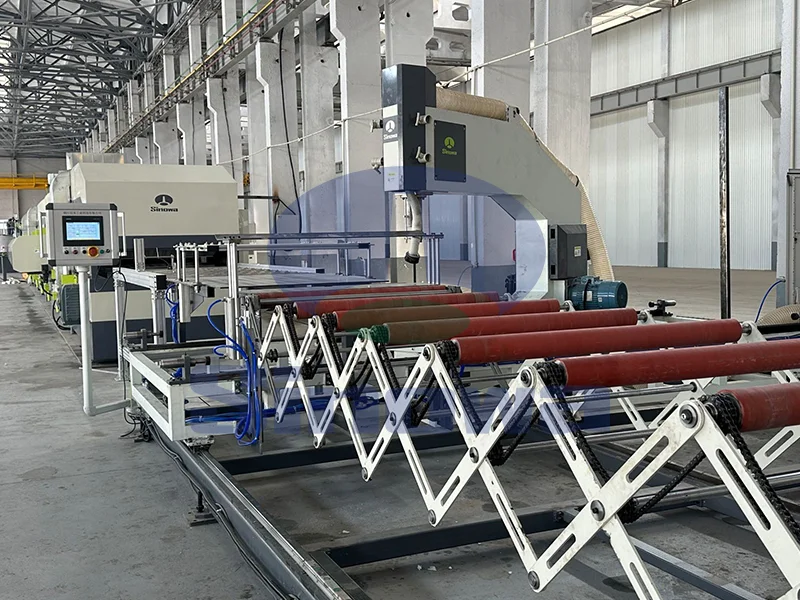
The structure of a PU sandwich panel making machine is a sophisticated integration of multiple functional systems, each playing a critical role in ensuring the smooth operation and high-quality output of the production process. Every component is designed to work in coordination, forming a seamless production line that transforms raw materials into finished PU sandwich panels. The basic structure typically includes an uncoiling system, forming system, preheating system, foaming system, laminating system, cooling system, cutting system, stacking system, and control system. The uncoiling system serves as the starting point of the production line, responsible for stably unwinding coiled facing materials. These facing materials usually include galvanized steel, galvalume, aluminum sheets, or non-woven fabrics, and the uncoiling system is equipped with tension control devices to prevent material deformation, wrinkling, or tearing during the unwinding process. Most uncoiling systems are equipped with two sets of decoilers to handle the upper and lower facing materials simultaneously, ensuring consistent feeding speed and tension, which lays a solid foundation for the uniformity of the final panel thickness and flatness.
Following the uncoiling system is the forming system, which shapes the flat facing materials into the desired profiles through a series of tandem rolling stands. The rollers in the forming system are precision-processed and undergo heat treatment and surface hardening to maintain shape stability under long-term high-load operation. By adjusting the spacing, angle, and speed of the rollers, the forming system can produce panels with different cross-sectional shapes, such as corrugated, trapezoidal, or flat profiles, to meet the specific requirements of different applications. For example, corrugated profiles enhance the structural rigidity and load-bearing capacity of the panels, making them suitable for roofing applications, while flat profiles are more commonly used for wall cladding in commercial and residential buildings. Some advanced forming systems also integrate additional functions such as embossing or punching, allowing for the production of panels with decorative patterns or pre-drilled holes, expanding the range of application scenarios.
The preheating system is a key component that ensures optimal adhesion between the facing materials and the PU foam core. Before entering the foaming process, the facing materials are passed through a preheating device, which raises their surface temperature to a specific range. This preheating process removes moisture from the surface of the facing materials, improves the wettability of the material surface, and promotes the chemical reaction between the PU foam and the facing materials, thereby enhancing the bonding strength and durability of the composite panel. The preheating system usually adopts a hot air circulation design, which ensures uniform heating of the entire surface of the facing materials, avoiding local overheating or insufficient heating that could affect the bonding quality. The temperature of the preheating system is adjustable, allowing for adaptation to different types of facing materials and PU foam formulas.
The foaming system is the core of the entire PU sandwich panel making machine, responsible for mixing the raw materials of the PU foam and injecting it between the upper and lower facing materials. The PU foam is formed by the chemical reaction of two main components: isocyanate and polyol, and the foaming system must accurately control the ratio, temperature, and mixing speed of these components to ensure the quality of the foam core. The foaming system typically includes a metering pump, mixing head, and foam injection device. The metering pump delivers isocyanate and polyol in precise proportions, ensuring consistent foam density and thermal conductivity. The mixing head, usually a high-pressure mixing head, ensures thorough homogenization of the two components before they are injected into the gap between the facing materials. This precise control over the mixing process is essential for producing a foam core with uniform structure, good insulation performance, and high mechanical strength. Some advanced foaming systems also integrate auxiliary devices to adjust the foaming speed and foam density, allowing for the production of panels with different insulation requirements.
The laminating system works in conjunction with the foaming system to ensure tight bonding between the PU foam core and the facing materials. After the foam is injected between the two facing materials, the composite structure is passed through a double-belt laminating unit, which applies constant pressure to the panel during the foam curing process. The double belts are made of high-temperature and wear-resistant materials, capable of withstanding the heat generated during the foam curing reaction and maintaining stable operation for long periods. The pressure applied by the laminating system is adjustable, ensuring that the PU foam fills the gap between the facing materials completely and that the surface of the panel remains flat and smooth. The double-belt laminating system also helps to control the thickness of the panel, ensuring consistent thickness across the entire length and width of the product.
After the laminating process, the composite panel enters the cooling system, where it is cooled to room temperature to complete the foam curing process. The cooling system typically uses a combination of air cooling and water cooling, ensuring rapid and uniform cooling of the panel. Rapid cooling helps to improve production efficiency, while uniform cooling prevents the panel from warping or deforming due to uneven temperature distribution. The cooling system is equipped with temperature control devices to adjust the cooling speed according to the thickness of the panel and the type of PU foam, ensuring that the foam core is fully cured and the panel has stable mechanical properties.
The cutting system is responsible for cutting the continuous composite panel into fixed lengths according to customer requirements. Most cutting systems adopt a "cut to length without machine stop" design, which allows for continuous production without interrupting the production line, significantly improving production efficiency. The cutting tool is usually a band saw or a circular saw, which is precision-adjusted to ensure clean, smooth cuts without damaging the panel surface or the foam core. The cutting length is controlled by the control system, which can be adjusted according to different production requirements, offering high flexibility.
The stacking system is the final component of the production line, responsible for automatically stacking the cut panels in an orderly manner for storage or transportation. The stacking system uses automatic lifting and conveying devices to stack the panels neatly, reducing manual labor and ensuring the safety of the finished products. Some advanced stacking systems also integrate packaging functions, allowing for the automatic packaging of the stacked panels, further improving production efficiency and reducing labor costs. The control system is the "brain" of the entire PU sandwich panel making machine, integrating digital servo technology, frequency conversion vector technology, and hydraulic control technology to realize centralized control and management of the entire production line. The control system is equipped with a man-machine conversation interface, allowing operators to input production parameters, monitor the production process, and adjust parameters in real time. This user-friendly design simplifies the operation process, reducing the skill requirements for operators and ensuring stable and reliable production.
The performance of a PU sandwich panel making machine is determined by a variety of factors, including automation level, production efficiency, product quality, energy efficiency, and operational stability. High automation level is one of the key performance characteristics of modern PU sandwich panel making machines, as it reduces manual intervention, improves production efficiency, and ensures consistent product quality. The entire production line can be operated by a small number of operators, usually 7-8 people, who are responsible for monitoring the production process, adding raw materials, and handling any abnormal situations. The automatic control system ensures that all components work in coordination, realizing seamless connection from raw material feeding to finished product stacking, and reducing the risk of human error.
Production efficiency is another important performance indicator, which is usually measured by the production speed and annual output. The production speed of PU sandwich panel making machines varies according to the model and configuration, typically ranging from 3 meters per minute to 14 meters per minute. The annual output can reach up to 1 million square meters or more, depending on the production speed and working hours. The continuous production design of the machine ensures that there is no interruption between processes, maximizing production efficiency and meeting the large-scale production needs of manufacturers. In addition, the machine's ability to handle a wide range of facing materials and panel specifications further enhances its production flexibility, allowing manufacturers to produce panels of different thicknesses, widths, and profiles to meet diverse market demands.
Product quality is the core performance of PU sandwich panel making machines, as it directly affects the performance and service life of the finished panels. The machine's precision control systems ensure that the panels have consistent thickness, flat surface, and tight bonding between the foam core and facing materials. The precise metering and mixing of the foaming system ensures that the PU foam core has uniform density, good thermal insulation performance, and high mechanical strength. The double-belt laminating system ensures that the panel surface is flat and smooth, without bubbles, wrinkles, or delamination. The cutting system ensures clean, precise cuts, with no burrs or damage to the panel. These performance characteristics ensure that the finished PU sandwich panels meet the highest industry standards for insulation, durability, and structural integrity.
Energy efficiency is an increasingly important performance indicator in modern manufacturing, as it helps to reduce production costs and minimize environmental impact. PU sandwich panel making machines adopt a variety of energy-saving designs, such as hot air circulation preheating systems, which reduce energy consumption by recycling heat. The frequency conversion vector technology used in the control system adjusts the speed of the motor according to the production load, reducing energy waste. In addition, the use of environment-friendly foaming agents, such as cyclopentane instead of CFCs, not only reduces environmental pollution but also improves the energy efficiency of the foaming process. These energy-saving features make PU sandwich panel making machines more environmentally friendly and cost-effective for long-term use.
Operational stability and ease of maintenance are also key performance characteristics of PU sandwich panel making machines. The machine's components are made of high-quality materials, such as high-strength steel and wear-resistant alloys, ensuring long service life and stable operation under long-term high-load conditions. The hydraulic system and pneumatic system are designed with high reliability, reducing the risk of breakdowns. The control system is equipped with fault diagnosis functions, which can quickly detect and alert operators to any abnormal situations, minimizing downtime. In addition, the machine's modular design makes maintenance and repair easier, as components can be replaced or repaired without disassembling the entire production line, reducing maintenance time and costs.
PU sandwich panel making machines can be classified into different types based on their production mode, core material, and application scenarios. The most common classification is based on the production mode, which includes continuous type and discontinuous type machines. Continuous type PU sandwich panel making machines are designed for large-scale, high-efficiency production, completing the entire production process from raw material feeding to finished product stacking in a continuous flow. These machines have high production speed, consistent product quality, and are suitable for mass production of standard-sized panels. The continuous production process ensures that there is no interruption between processes, maximizing production efficiency and reducing labor costs. Continuous type machines are widely used in large manufacturing plants that produce PU sandwich panels for industrial, commercial, and residential applications.
Discontinuous type PU sandwich panel making machines, on the other hand, are designed for small-scale production or customized panels. These machines complete the production process in batches, with each batch of panels going through the uncoiling, forming, foaming, laminating, cooling, and cutting processes sequentially. Discontinuous type machines are more flexible, allowing for the production of panels with special sizes, profiles, or foam densities that may not be feasible with continuous type machines. They are suitable for small manufacturing plants, workshops, or businesses that require small batches of customized panels. Although the production efficiency of discontinuous type machines is lower than that of continuous type machines, their flexibility makes them an ideal choice for specialized applications.
Another classification is based on the type of core material that the machine can produce. Most PU sandwich panel making machines can produce panels with PU foam cores, but some advanced machines can also produce panels with polyisocyanurate (PIR) foam cores. PIR foam is a modified PU foam with higher fire resistance and lower thermal conductivity, making it suitable for applications that require high fire safety standards, such as commercial buildings, hospitals, and industrial facilities. Machines that can produce both PU and PIR foam cores are more versatile, allowing manufacturers to expand their product range and meet different market demands. In addition, some machines can also produce panels with other core materials, such as mineral wool or EPS, further enhancing their versatility.
PU sandwich panel making machines can also be classified based on their application scenarios. For example, some machines are specifically designed for the production of roofing panels, with forming systems that can produce corrugated or trapezoidal profiles with high load-bearing capacity. Other machines are designed for the production of wall panels, with flat or slightly corrugated profiles that are suitable for wall cladding. There are also specialized machines for the production of cold storage panels, which require higher insulation performance and airtightness. These specialized machines are equipped with advanced foaming systems that can produce foam cores with high density and low thermal conductivity, ensuring that the cold storage panels can maintain stable low temperatures with minimal energy consumption. In addition, some machines are designed for the production of panels used in prefabricated buildings, with lightweight and high-strength characteristics that facilitate rapid assembly.
The applications of PU sandwich panel making machines are wide-ranging, covering various industries such as construction, cold storage, industrial manufacturing, food processing, healthcare, and automotive. In the construction industry, PU sandwich panels produced by these machines are widely used for roofing, wall cladding, and partition walls in commercial buildings, residential buildings, industrial warehouses, and prefabricated buildings. The panels' excellent thermal insulation performance helps to reduce energy consumption for heating and cooling, making buildings more energy-efficient. Their lightweight nature reduces the load on the building structure, while their high structural strength ensures durability and safety. In addition, the panels' easy installation and customizable designs make them a popular choice for modern construction projects, reducing construction time and costs.
The cold storage and refrigeration industry is another major application area for PU sandwich panel making machines. PU sandwich panels have excellent thermal insulation performance, with low thermal conductivity and high closed-cell rate, making them ideal for the construction of cold storage facilities, refrigerated warehouses, and refrigerated trucks. The panels produced by these machines can maintain stable low temperatures inside the cold storage, reducing energy consumption and ensuring the quality of perishable goods such as food, pharmaceuticals, and chemicals. The airtightness of the panels also prevents cold air leakage, further improving the energy efficiency of the cold storage facilities. In addition, the panels' resistance to moisture and corrosion ensures long service life in the humid and low-temperature environment of cold storage facilities.
In the industrial manufacturing sector, PU sandwich panels are used for the construction of factory buildings, workshops, and equipment enclosures. The panels' high structural strength and resistance to wear, corrosion, and high temperatures make them suitable for harsh industrial environments. They can be used to build partitions between different production areas, enclose equipment to reduce noise and dust pollution, and provide thermal insulation for high-temperature equipment. In addition, PU sandwich panels are also used in the construction of clean rooms in the electronics, pharmaceutical, and food processing industries. The panels' smooth surface, airtightness, and resistance to contamination make them ideal for clean room environments, where strict control over dust, bacteria, and temperature is required.
The food processing industry also relies heavily on PU sandwich panels produced by these machines. The panels are used for the construction of food processing plants, storage warehouses, and cold storage facilities, ensuring that the food is processed and stored in a clean, hygienic, and temperature-controlled environment. The panels' resistance to moisture, mold, and bacteria prevents contamination of food products, ensuring food safety. In addition, the panels' easy cleaning and maintenance make them suitable for food processing environments, where hygiene standards are extremely high.
The healthcare industry uses PU sandwich panels for the construction of hospitals, clinics, and laboratories. The panels' airtightness, thermal insulation, and resistance to bacteria make them ideal for environments that require strict infection control, such as operating rooms, intensive care units, and laboratories. The panels' smooth surface is easy to clean and disinfect, reducing the risk of cross-contamination. In addition, the panels' lightweight nature and easy installation make them suitable for renovation and expansion projects in healthcare facilities, minimizing disruption to ongoing operations.
The automotive industry is another emerging application area for PU sandwich panels produced by these machines. The panels are used for the production of lightweight components such as car bodies, interior trim, and cargo compartments. The lightweight nature of the panels helps to reduce the overall weight of the vehicle, improving fuel efficiency and reducing emissions. The panels' high structural strength and impact resistance ensure safety, while their thermal insulation and sound insulation performance improve the comfort of the vehicle interior. In addition, the panels' resistance to corrosion and wear makes them suitable for use in automotive components that are exposed to harsh environmental conditions.
In addition to these major application areas, PU sandwich panel making machines also find applications in other sectors such as agriculture, aerospace, and marine engineering. In agriculture, the panels are used for the construction of greenhouses, livestock sheds, and storage facilities, providing thermal insulation and protection against harsh weather conditions. In aerospace, lightweight PU sandwich panels are used for the construction of aircraft components, reducing weight and improving fuel efficiency. In marine engineering, the panels are used for the construction of ship cabins and decks, due to their resistance to corrosion, moisture, and saltwater.
As the demand for energy-efficient, durable, and versatile building and industrial materials continues to grow, PU sandwich panel making machines are constantly evolving to meet increasingly stringent performance and efficiency standards. Advances in technology have led to the development of more automated, energy-efficient, and flexible machines, capable of producing high-quality panels with a wide range of specifications and applications. The integration of digital technologies, such as artificial intelligence and Internet of Things, is also transforming the operation and management of these machines, allowing for real-time monitoring, predictive maintenance, and remote control. This not only improves production efficiency and product quality but also reduces operational costs and environmental impact.
In conclusion, PU sandwich panel making machines are sophisticated pieces of equipment that play a crucial role in modern manufacturing. Their complex structure, which integrates multiple functional systems, ensures efficient and high-quality production of PU sandwich panels. The key performance characteristics of these machines, including high automation, production efficiency, product quality, energy efficiency, and operational stability, make them an indispensable tool for manufacturers across various industries. The different types of machines, classified based on production mode, core material, and application scenarios, offer flexibility and versatility to meet diverse market demands. The wide-ranging applications of PU sandwich panels, from construction and cold storage to industrial manufacturing and healthcare, highlight the importance of these machines in driving innovation and sustainability in various sectors. As technology continues to advance, PU sandwich panel making machines will continue to evolve, providing more efficient, environmentally friendly, and cost-effective solutions for the production of high-quality composite panels.
«PU Sandwich Panel Making Machine» Update Date:2026/4/1
URL: https://www.sinowa.cn/en/blog/pu-sandwich-panel-making-machine.html