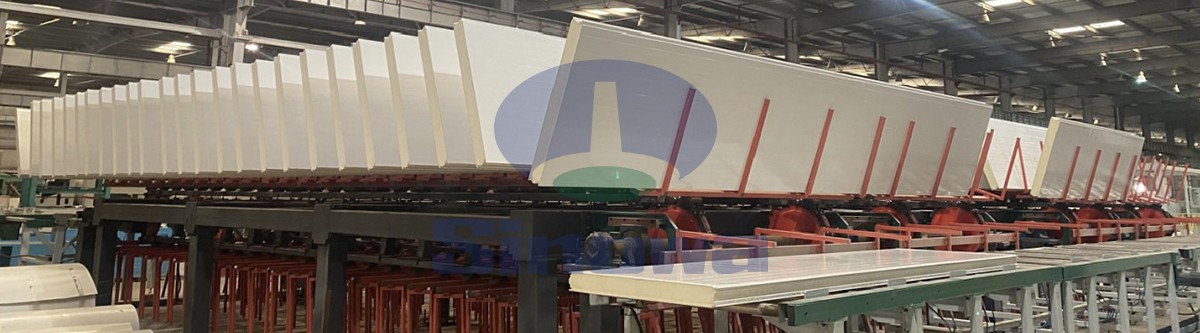
Dedicated to the research and development of high-end & high-efficiency sandwich panel production lines, Sinowa is comprehensively taking the leading position in terms of efficiency, automation control level, HMI, environment protection and energy consumption, with subversive designs made in some critical technological fields to procure exceptional cost performance and customer-friendly experience for the entire insulated sandwich panels lines.
The adoption of system integration technology and bus control technology accomplishes the full automatization of integrated and coordinated control of the entire production line with accessible remote interactive communication. Ranking the first-class level in the world, it is currently the continuous pu sandwich panel line in the market taking a comprehensive lead in high performance.
Based on the continuous technological pursuit, the sandwich panel production line developed by Sinowa provides you with high-efficiency industrial value. Based on China's cost advantage and our hard-working technology concept, our production line has a world-leading price-performance advantage. Continuous PU/PIR Sandwich Panel Production Line can meet a variety of production needs of customers.The whole line design concept of modularization enables all our components to be integrated and combined at will.
Our continuous pu sandwich panel production line can easily automate the production of roof sandwich panel, wall sandwich panel, cold storage sandwich panel and other products by different combination and configuration selection and siple switching. The inner core layer can be polyrethane or rock wool, glass wool, an so on.
The sandwich panel machine has high adaptability, which may produce various sandwich panel of the PU, PIR and rock wool systems.
We may design various products according to the customer’s requirements, including various configurations, so as to meet their demands with flexible price system.
Highly integrated and linked control system centralizes all control points at the main central center, achieving parameter linkage, fault self-diagnosis controlled by the whole continuous sandwich panel line and shipping distance control.
High-level automatic control system also saves the manpower and reduces the manpower loss for customers.
Concentrated system control is fully realized in the practice of concentrated process control so that the control system of all the movements of the parts in the sandwich panel line is integrated in one process control console with accessible remote communication to elevate the automation and reduce the allocated number of personnel for the assembly line.
The main engine with modularized design achieves the precision operation of the sandwich panel production line, stable and reliable quality, less part and maintenance loss.
The whole pu sandwich panel production line is strictly modularized in design to ensure the greatest probability for the parts to be interchangeable, making it the most cost- and energy-saving. No joining made manually, all the key processes of the parts are completed in the machining center. As soon as the parts are inspected and warehoused, they enter into the assembly process. The modularized assembly can not only greatly increase the production efficiency but, most importantly, realize quick delivery as well. It elevates the reliability of product quality to a totally new level and minimizes the influence from human factors.
The whole pu sandwich panel line has over 40 innovative inventions, making our products have lots of unique features and the comprehensive performance of our production line leading in the industry.
The precision servo hoisting mechanism employed by the main engine without hydraulic system makes the board thickness control flexible and the customer may conveniently change or adjust the board thickness. There will be not such troubles as hydraulic system adjustment, leakage, maintenance, etc.
High-level energy saving and protection design makes the whole puf panel machine production line possible to produce around the clock throughout the year and the customer will save huge budget. In addition, the isolated heat preservation room is constructed for warming the environment. The energy saving and protection design of our high-tech sandwich panel lines may guarantee that the customer’s production line may be freely heated and produce in the main time to save more costs for customers.
The high-power low-consumption design quickens the reaction of the pu sandwich panel machine while energy consumption is kept low.
With the brand-new, fully sealed inner insulation design, the energy consumption is controlled at the minimum level to achieve the design objective of less than an hour for the insulation system to be activated from the room temperature above 5℃ to the production process temperature.
The energy consumption is only 40% that of those similar products.
| PRODUCTION TYPE | PU | PIR | PHENOLIC | |||
|---|---|---|---|---|---|---|
| PRODUCTION USE | INSULATION PANEL | DOCORATIVE PANEL | ||||
| SURFACE OF SHEET | ALUMINUM FOIL | NON-WOVEN FABRIC | PAPER | NAKED | ||
| PRODUCT THICKNESS | 10m--- 200mm | |||||
| PRODUCTION SPEED | 3.0m---25m |
|---|---|
| FOAMING METHOD | TWO OR MULTI COMPONENTS FOAMING |
| FOAMING AGENT | PENTANE OR 141B |
| LENGTH OF LINE | 45m—100m CUSTOMER OPTIONAL |
In the modern construction and manufacturing industries, continuous production lines have become the core driving force behind the efficient and high-quality production of sandwich panels, with Continuous PU Sandwich Panel Production Lines and Continuous PIR Sandwich Panel Production Lines standing out as two of the most widely used and essential equipment. These two production lines share certain structural similarities while differing significantly in core technologies, performance characteristics, product types, and application scenarios, each playing an irreplaceable role in meeting the diverse needs of various industries. To fully understand their value and potential, it is necessary to conduct a comprehensive and in-depth exploration of their structure, performance, types, and applications, revealing the intrinsic logic of their operation and the broad prospects of their industrial applications.
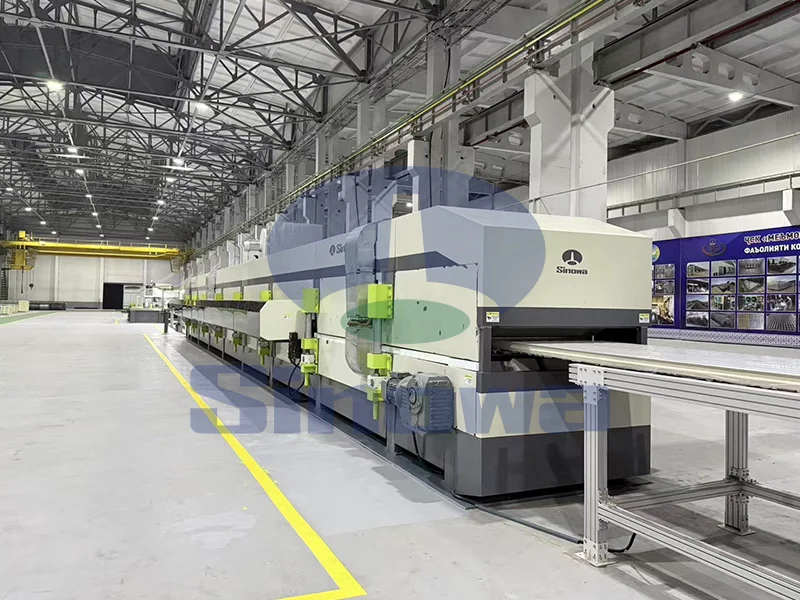
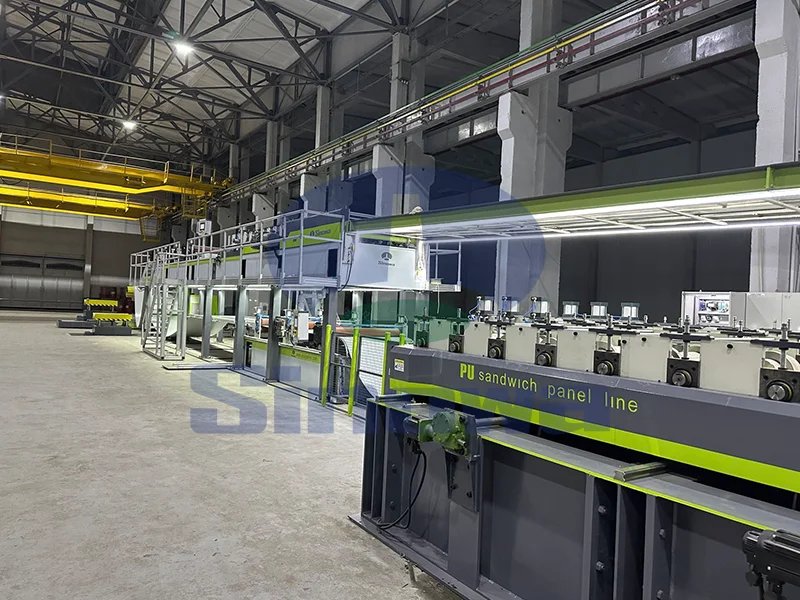
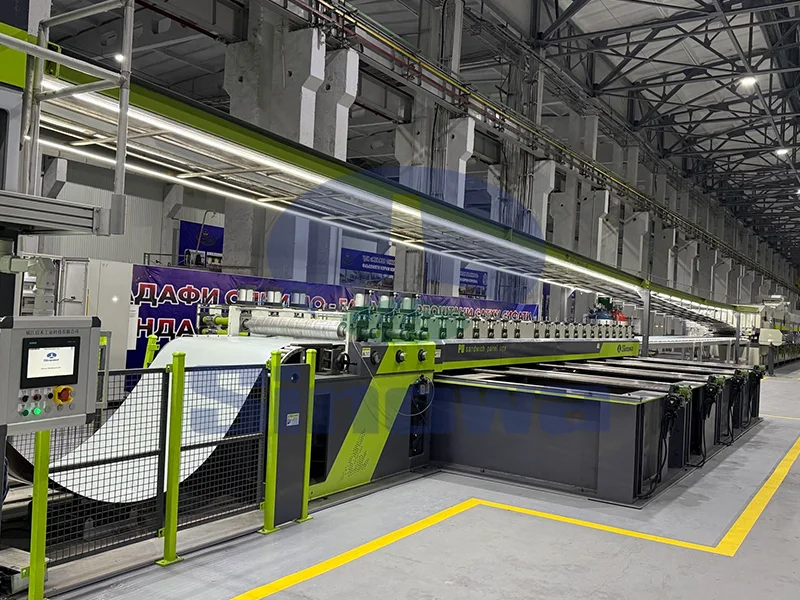
The structure of Continuous PU Sandwich Panel Production Lines and Continuous PIR Sandwich Panel Production Lines is designed based on the principle of continuous and automated production, aiming to achieve seamless connection of each process, improve production efficiency, and ensure the consistency and stability of product quality. Although there are differences in the core foaming systems due to the different characteristics of PU and PIR materials, the overall structural framework of the two production lines is basically the same, consisting of unwinding system, preprocessing system, foaming system, composite forming system, cutting system, cooling system, stacking system, and automatic control system. Each system undertakes specific functions and cooperates closely to form a complete production chain, from raw material input to finished product output, realizing full-process automation with minimal manual intervention, which not only reduces labor costs but also avoids errors caused by human operations, laying a solid foundation for the production of high-quality sandwich panels.
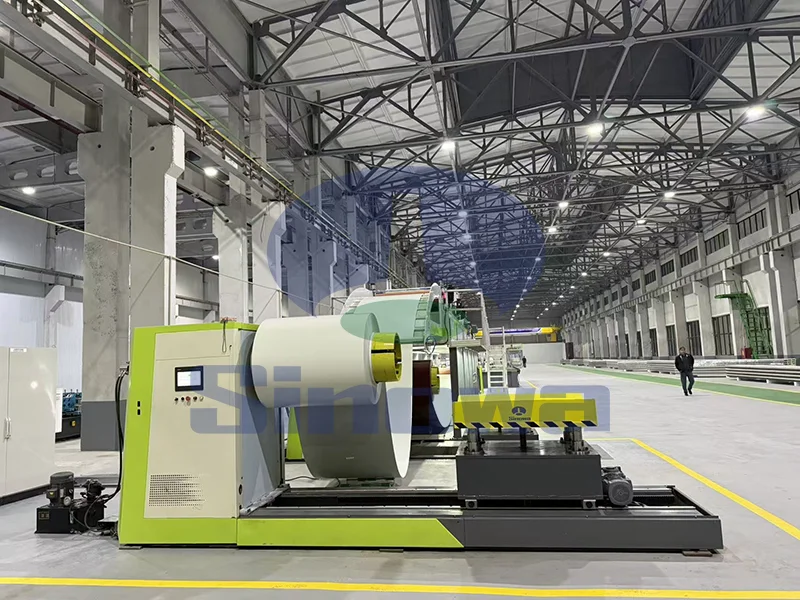
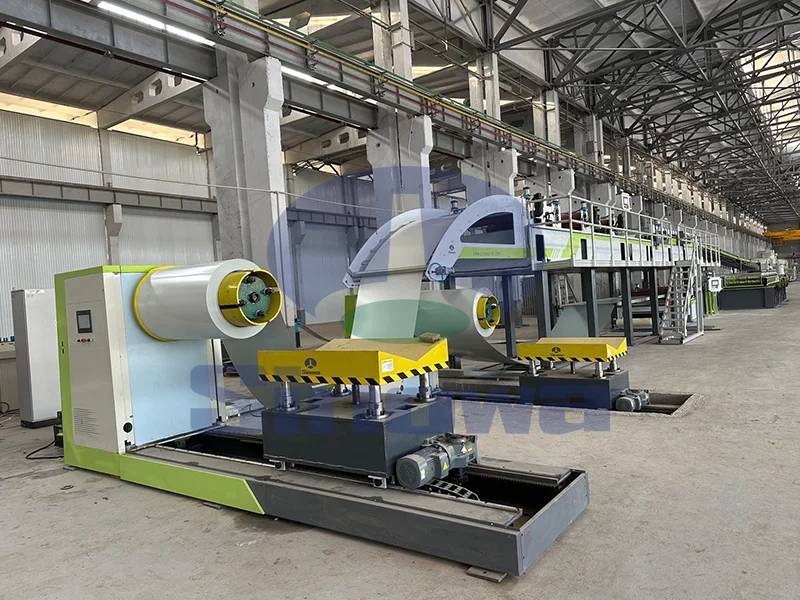
The unwinding system is the starting link of the entire production line, responsible for uncoiling and conveying the surface materials of the sandwich panels. The surface materials commonly used in both production lines include pre-painted galvanized steel, galvalume, aluminum, and fiberglass-reinforced plastic (FRP), which are selected according to different application scenarios and performance requirements. The unwinding system is equipped with a tension control device, which can adjust the tension of the surface material in real time to ensure that the material is conveyed smoothly without wrinkles, slack, or breakage. This is crucial for the subsequent composite forming process, as any unevenness of the surface material will directly affect the flatness and bonding firmness of the final sandwich panel. In addition, the unwinding system is usually equipped with a material positioning device to ensure that the surface material is accurately aligned with the subsequent foaming and forming links, avoiding deviation and ensuring the dimensional accuracy of the product.
The preprocessing system is an important link to improve the bonding performance between the surface material and the core material, which directly affects the structural stability and service life of the sandwich panel. This system mainly includes surface cleaning, preheating, and primer coating processes. The surface cleaning process removes oil, dust, and other impurities on the surface of the surface material through brushing, blowing, or chemical cleaning methods, ensuring that the surface is clean and dry, which is conducive to the full contact and bonding between the surface material and the foaming core material. The preheating process adjusts the temperature of the surface material to the optimal range for bonding through a heating device. For PU and PIR sandwich panels, the preheating temperature of the surface material usually needs to be controlled within a certain range to promote the reaction between the foaming material and the surface material, enhance the bonding strength, and avoid problems such as poor bonding or delamination caused by excessive temperature difference. The primer coating process is to apply a layer of special primer on the surface of the surface material, which can further improve the adhesion between the surface material and the core material, form a stable bonding interface, and prevent the core material from reacting with the surface material to cause degradation, thereby extending the service life of the sandwich panel.
The foaming system is the core part that distinguishes Continuous PU Sandwich Panel Lines from Continuous PIR Sandwich Panel Production Lines, as it involves the preparation and foaming process of different core materials (PU and PIR). For Continuous PU Sandwich Panel Production Lines, the foaming system mainly consists of raw material storage tanks, metering pumps, mixing heads, and foaming molds. The raw materials of PU foam are mainly isocyanate and polyol, which are stored in separate storage tanks and transported to the mixing head through metering pumps according to a certain proportion. The metering pumps are equipped with high-precision flow meters to ensure the accuracy of the raw material ratio, which is crucial for the performance of the PU foam core. The mixing head fully mixes the two raw materials through high-speed rotation, making them react quickly to generate foam. The foaming mold is designed according to the thickness and width of the sandwich panel, and the foam is injected into the mold to expand and fill the entire mold cavity, forming a uniform and dense PU foam core.
In contrast, the foaming system of Continuous PIR Sandwich Panel Lines has certain differences in raw material ratio and reaction conditions. PIR foam is an improved product of PU foam, which is prepared by adjusting the ratio of isocyanate and polyol, increasing the content of isocyanurate rings in the product, and adding special catalysts and flame retardants. The raw material storage and metering system of the PIR foaming system is similar to that of the PU foaming system, but the metering ratio of the raw materials is different—PIR foam usually uses a higher proportion of isocyanate, with a ratio of polyol to isocyanate of about 2.9:1, while PU foam uses a ratio of 2:1. In addition, the reaction temperature and time of PIR foam are also different from those of PU foam. The PIR foaming reaction requires a higher temperature and a longer curing time to ensure the formation of a stable isocyanurate ring structure, which gives PIR foam better fire resistance and thermal stability. The mixing head of the PIR foaming system also needs to have better mixing performance to ensure that the raw materials are fully mixed and the reaction is uniform, avoiding the occurrence of local foam unevenness or performance degradation.
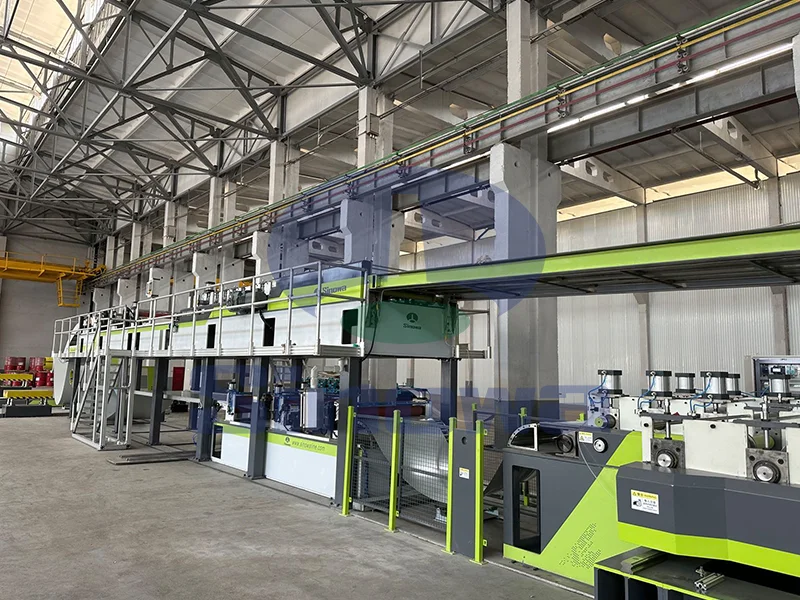
The composite forming system is responsible for bonding the surface material and the foamed core material into an integrated sandwich panel. This system mainly consists of a composite roller group and a pressure control device. After the surface material is preprocessed, it is conveyed to the composite roller group, and the foaming material is injected between the two layers of surface material through the mixing head. Under the action of the composite roller group, the surface material and the foaming core material are closely bonded together, and the pressure control device adjusts the pressure of the composite roller in real time to ensure that the bonding between the two is firm and uniform, without gaps or delamination. The composite roller group is usually made of high-strength steel, with a smooth surface and high precision, which can ensure the flatness of the sandwich panel surface. At the same time, the composite forming system is equipped with a thickness control device, which can adjust the thickness of the sandwich panel by changing the distance between the composite rollers, meeting the needs of different thickness specifications.
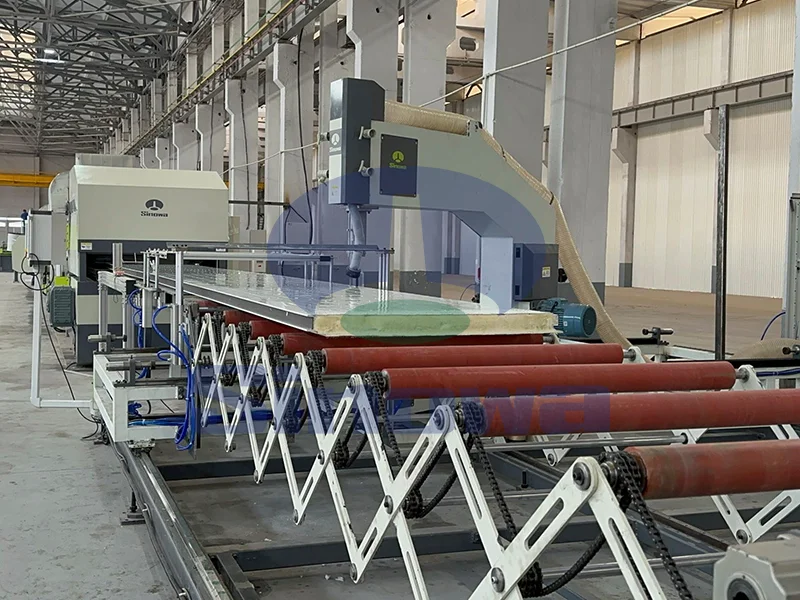
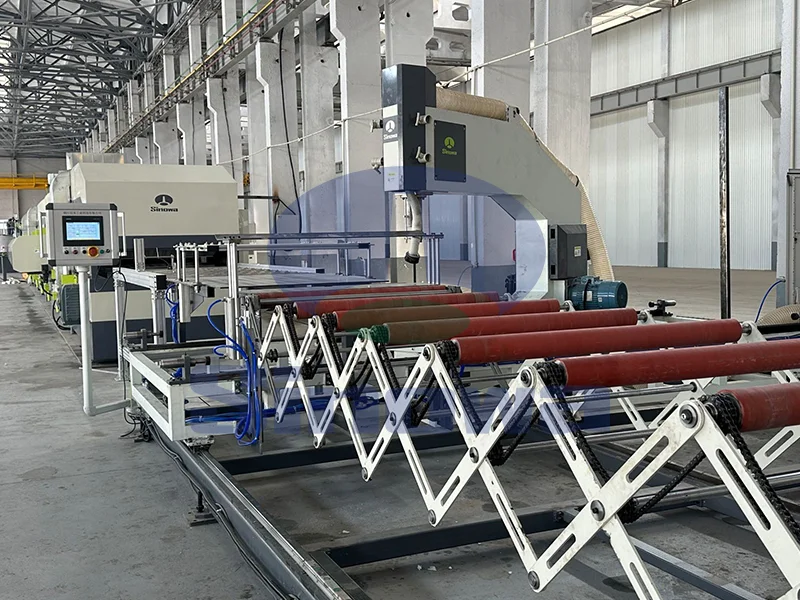
The cutting system is used to cut the continuously formed sandwich panel into finished products of the required length. This system mainly consists of a cutting device, a length measuring device, and a positioning device. The length measuring device accurately measures the length of the continuously moving sandwich panel through a photoelectric sensor or encoder, and sends a signal to the cutting device when the set length is reached. The cutting device uses a circular saw or band saw to cut the sandwich panel, and the cutting speed is synchronized with the conveying speed of the production line to ensure that the cut is flat and free of burrs. The positioning device ensures that the cutting position is accurate, avoiding deviation and ensuring the dimensional accuracy of the finished product. In addition, the cutting system is usually equipped with a dust removal device to collect the dust and debris generated during the cutting process, ensuring the cleanliness of the production environment and protecting the health of operators.
The cooling system is an essential link to ensure the stability of the sandwich panel performance. After the composite forming and cutting, the sandwich panel still has a certain temperature, and the foaming core material has not yet fully cured. If it is directly stacked, it may cause deformation or performance degradation of the product. The cooling system uses air cooling or water cooling to reduce the temperature of the sandwich panel to room temperature, accelerating the curing of the foaming core material and ensuring the structural stability and performance consistency of the product. The air cooling system usually uses a fan to blow cold air to the surface of the sandwich panel, which is simple in structure and low in energy consumption; the water cooling system uses a water-cooled roller or water spray device to cool the sandwich panel, which has a faster cooling speed and better cooling effect, suitable for large-scale and high-speed production lines.
The stacking system is responsible for automatically stacking the cooled finished sandwich panels, facilitating storage and transportation. This system mainly consists of a conveying roller, a stacking mechanical arm, and a control system. The finished sandwich panels are conveyed to the stacking area through the conveying roller, and the stacking mechanical arm grabs the sandwich panels according to the set stacking height and sequence, and stacks them neatly. The control system can adjust the stacking speed and stacking height according to the production speed and product specifications, ensuring that the stacking is stable and not easy to collapse. In addition, the stacking system is usually equipped with a protective device to avoid damage to the sandwich panel surface during the stacking process.
The automatic control system is the "brain" of the entire production line, responsible for coordinating and controlling the operation of each system, ensuring the smooth and efficient operation of the production line. This system mainly consists of a PLC controller, a touch screen, a sensor, and an actuator. The PLC controller collects signals from various sensors (such as temperature sensors, pressure sensors, length sensors, etc.), processes and analyzes the signals, and sends control commands to each actuator to adjust the operation parameters of each system in real time, such as the conveying speed of the surface material, the ratio of foaming raw materials, the temperature of the preheating system, the pressure of the composite forming system, and the cutting length. The touch screen provides a human-machine interaction interface, allowing operators to set production parameters, monitor the operation status of the production line, and handle faults in a timely manner. The automatic control system can realize automatic adjustment and fault alarm, reducing the labor intensity of operators and improving the reliability and stability of the production line.
In addition to the above main systems, both Continuous PU Sandwich Panel Machines and Continuous PIR Sandwich Panel Production Lines are usually equipped with auxiliary systems such as raw material mixing systems, waste recycling systems, and safety protection systems. The raw material mixing system is used to mix additives such as catalysts, flame retardants, and foaming agents into the foaming raw materials to improve the performance of the core material; the waste recycling system collects and recycles the waste generated during the production process (such as cutting scraps, unqualified products, etc.), reducing material waste and environmental pollution; the safety protection system includes emergency stop devices, safety guards, and alarm devices, which can effectively prevent safety accidents and ensure the personal safety of operators.
The performance of Continuous PU Sandwich Panel Production Lines and Continuous PIR Sandwich Panel Machines directly determines the quality of the produced sandwich panels and the efficiency of the production process. Although the two production lines have similar structural frameworks, their performance characteristics are significantly different due to the differences in core foaming technologies and raw materials, mainly reflected in production efficiency, product quality stability, energy consumption, environmental protection, and adaptability.
In terms of production efficiency, both production lines have the advantage of continuous production, which is much higher than the discontinuous production mode. The production speed of Continuous PU Sandwich Panel Production Lines is usually between 3-12 meters per minute, and the annual output can reach hundreds of thousands to millions of square meters, depending on the configuration of the production line and the specifications of the products. Due to the relatively fast foaming and curing speed of PU foam, the production efficiency of PU production lines is generally slightly higher than that of PIR production lines. The production speed of Continuous PIR Sandwich Panel Production Lines is usually between 2-8 meters per minute, because the PIR foaming reaction requires a longer curing time to ensure the formation of a stable structure, which to a certain extent limits the improvement of production speed. However, with the continuous advancement of technology, the production efficiency of PIR production lines is also constantly improving, gradually narrowing the gap with PU production lines.
Product quality stability is another important performance indicator of the two production lines. For Continuous PU Sandwich Panel Manufacturing Lines, the key to ensuring product quality stability lies in the accuracy of the raw material ratio and the stability of the foaming process. The high-precision metering pump and advanced mixing head can ensure that the PU foam core has a uniform density and stable performance, and the composite forming system can ensure that the bonding between the surface material and the core material is firm, avoiding problems such as delamination and uneven thickness. The product quality stability of Continuous PIR Sandwich Panel Production Lines is more dependent on the control of the reaction conditions, because the formation of PIR foam's isocyanurate ring structure is very sensitive to temperature, pressure, and raw material ratio. Therefore, PIR production lines usually need more precise temperature control and raw material metering systems to ensure that the foaming reaction is carried out stably, so that the produced PIR sandwich panels have consistent fire resistance, thermal insulation, and mechanical properties.
In terms of energy consumption, both production lines need to consume a certain amount of energy during the production process, mainly including electric energy, thermal energy, and energy consumed by raw material transportation. The energy consumption of Continuous PU Sandwich Panel Production Lines is mainly concentrated in the foaming system and the preheating system. The PU foaming reaction is an exothermic reaction, which can generate a certain amount of heat, which can be recycled to a certain extent to reduce energy consumption. The energy consumption of Continuous PIR Sandwich Panel Production Lines is relatively higher than that of PU production lines, because the PIR foaming reaction requires a higher temperature and a longer curing time, which requires more thermal energy input. However, with the application of energy-saving technologies (such as waste heat recovery systems, high-efficiency insulation materials, and energy-saving motors), the energy consumption of both production lines is constantly decreasing, meeting the requirements of energy conservation and environmental protection.
Environmental protection performance is an important factor affecting the development of the two production lines in recent years. In the past, some foaming agents used in PU and PIR production lines (such as CFCs) would cause damage to the ozone layer, which has been gradually eliminated with the improvement of environmental protection requirements. At present, both production lines generally use environmentally friendly foaming agents (such as pentane, HFCs, etc.), which have no damage to the ozone layer and low greenhouse gas emissions, meeting the global environmental protection standards. In addition, the waste recycling system equipped in the production lines can effectively recycle waste materials, reduce solid waste pollution, and the exhaust gas and wastewater generated during the production process can be discharged after treatment, ensuring that the production process is environmentally friendly and sustainable.
Adaptability is another important performance characteristic of the two production lines, referring to their ability to produce sandwich panels of different specifications, types, and performance according to different needs. Continuous PU Sandwich Panel Production Lines have strong adaptability, and can produce sandwich panels of different thicknesses (usually 30-200mm), widths (usually 600-1200mm), and lengths (customizable) by adjusting the parameters of the foaming system, composite forming system, and cutting system. At the same time, they can also produce sandwich panels with different surface materials and core material densities to meet the needs of different application scenarios. Continuous PIR Sandwich Panel Production Lines also have good adaptability, but due to the particularity of PIR foam, the adjustment range of some parameters (such as raw material ratio, reaction temperature) is relatively narrow, and the production of sandwich panels with extremely low density or special performance requires more precise system adjustment. However, with the modular design of the production lines, the adaptability of PIR production lines is also constantly improving, and they can quickly switch between different product specifications and types by replacing modules.
The types of Continuous PU Sandwich Panel Production Lines and Continuous PIR Sandwich Panel Manufacturing Lines can be divided into different categories according to different classification standards, such as production scale, degree of automation, product specifications, and foaming technology, each type having its own characteristics and applicable scenarios.
According to the production scale, both production lines can be divided into small, medium, and large-scale production lines. Small-scale production lines have a production speed of less than 3 meters per minute and an annual output of less than 100,000 square meters. They are characterized by small investment, small floor space, simple structure, and easy operation, suitable for small enterprises, workshops, or places with small production demand, such as small-scale construction projects, local decoration companies, etc. Medium-scale production lines have a production speed of 3-8 meters per minute and an annual output of 100,000-500,000 square meters. They have a balanced performance in terms of production efficiency, product quality, and investment cost, suitable for medium-sized enterprises with certain production scale and market demand, which can meet the needs of regional construction, industrial production, and other fields. Large-scale production lines have a production speed of more than 8 meters per minute and an annual output of more than 500,000 square meters. They are equipped with advanced automation systems, high-precision production equipment, and complete auxiliary systems, with high production efficiency, stable product quality, and strong adaptability, suitable for large enterprises with large market demand and large-scale production, which can meet the needs of large-scale construction projects, industrial parks, and international export.
According to the degree of automation, both production lines can be divided into semi-automatic and fully automatic production lines. Semi-automatic production lines require a certain amount of manual operation, such as manual feeding, manual adjustment of parameters, and manual stacking of finished products. They have a simple structure, low investment cost, and are suitable for small enterprises or places with low labor costs, but the production efficiency is relatively low, and the product quality is easily affected by human factors. Fully automatic production lines realize full-process automation from raw material input to finished product output, with only a small number of operators needed to monitor the operation of the production line and handle faults. They have high production efficiency, stable product quality, low labor intensity, and are suitable for large and medium-sized enterprises with large production scale and high quality requirements. With the development of automation technology, fully automatic production lines have become the mainstream trend of the industry, and more and more enterprises are choosing to invest in fully automatic production lines to improve their market competitiveness.
According to the product specifications, both production lines can be divided into special-purpose and general-purpose production lines. Special-purpose production lines are designed for specific product specifications, such as sandwich panels for cold storage (with a thickness of more than 100mm), sandwich panels for roofs (with a corrugated surface), and sandwich panels for clean rooms (with a smooth surface and high flatness). They have high production precision and are suitable for scenarios with specific product requirements, such as cold storage construction, electronic factory clean rooms, etc. General-purpose production lines can produce sandwich panels of various specifications and types by adjusting parameters, with strong adaptability, suitable for enterprises that need to produce multiple types of products to meet different market demands.

According to the foaming technology, Continuous PU Sandwich Panel Production Equipments can be divided into high-pressure foaming and low-pressure foaming production lines. High-pressure foaming production lines use high-pressure mixing heads to mix the raw materials, with fast mixing speed, uniform mixing effect, and high foaming efficiency, suitable for large-scale production of high-quality PU sandwich panels. Low-pressure foaming production lines use low-pressure mixing heads, with simple structure, low investment cost, but relatively low foaming efficiency and uneven mixing effect, suitable for small-scale production or low-quality requirements. Continuous PIR Sandwich Panel Production Lines can be divided into one-step foaming and two-step foaming production lines. One-step foaming production lines complete the mixing, foaming, and curing of raw materials in one step, with simple process, high production efficiency, and suitable for large-scale production. Two-step foaming production lines first prepare the prepolymer, then add foaming agents and other additives for foaming and curing, with more precise control of product performance, suitable for the production of high-performance PIR sandwich panels, such as those with high fire resistance and low thermal conductivity.
In addition, with the development of new technologies, both production lines have derived some new types, such as intelligent production lines and modular production lines. Intelligent production lines integrate advanced technologies such as the Internet of Things, big data, and artificial intelligence, which can realize real-time monitoring, remote control, and intelligent adjustment of the production line, improving production efficiency and product quality, and reducing production costs. Modular production lines adopt a modular design, and each system is designed as an independent module, which can be freely combined and replaced according to production needs, facilitating the upgrading and transformation of the production line, and reducing the investment cost of equipment renewal.
The applications of Continuous PU Sandwich Panel Production Lines and Continuous PIR Sandwich Panel Production Lines are closely related to the performance of the sandwich panels they produce. Due to the different performance characteristics of PU and PIR sandwich panels, the two production lines have their own focus in application scenarios, covering industrial, commercial, civil, and special fields, and playing an important role in promoting the development of various industries.
Continuous PU Sandwich Panel Production Lines are mainly used to produce PU sandwich panels, which have the characteristics of excellent thermal insulation, lightweight, high mechanical strength, good sound insulation, and easy installation, and are widely used in various fields. In the industrial field, PU sandwich panels produced by continuous production lines are widely used in the construction of industrial workshops, logistics warehouses, and clean rooms. Industrial workshops (such as machinery manufacturing, electronics, food processing, chemical, etc.) have high requirements for thermal insulation, sound insulation, and moisture resistance. PU sandwich panels can effectively maintain the stability of the indoor temperature, reduce noise pollution, and prevent moisture from affecting production equipment and products. Logistics warehouses, especially cold storage warehouses, have strict requirements for thermal insulation performance. PU sandwich panels have low thermal conductivity (0.022-0.026 W/m·K at 25℃) and can maintain a stable low temperature environment, which is suitable for storing food, medicine, and other perishable products. Clean rooms (such as pharmaceutical, biological laboratories, electronic dust-free workshops, etc.) require the surface of the panels to be smooth, non-dusting, and easy to clean. PU sandwich panels with appropriate surface materials can meet these requirements, ensuring the cleanliness of the production environment.

In the commercial field, PU sandwich panels produced by continuous production lines are used in the construction of shopping malls, supermarkets, office buildings, stadiums, and exhibition halls. Shopping malls and supermarkets need to maintain a comfortable indoor temperature, and PU sandwich panels can reduce the energy consumption of air conditioning, reducing operating costs. Office buildings require good sound insulation and thermal insulation performance to provide a comfortable working environment, and PU sandwich panels can meet these needs while being lightweight and easy to install, shortening the construction period. Stadiums and exhibition halls usually have large-span spaces, and the lightweight and high-strength characteristics of PU sandwich panels make them suitable for roof and exterior wall construction, which can reduce the load of the building structure and improve the safety and stability of the building.
In the civil field, PU sandwich panels produced by continuous production lines are used in the construction of residential buildings, villas, and temporary houses. In residential buildings and villas, PU sandwich panels are used as exterior walls, interior partitions, and roofs, which can improve the thermal insulation and sound insulation performance of the house, reduce energy consumption for heating and cooling, and improve the comfort of living. Temporary houses (such as construction site temporary offices, dormitories, and disaster relief temporary shelters) require fast construction and easy disassembly. PU sandwich panels are lightweight and easy to install, which can quickly form a usable space, meeting the needs of temporary use.
In addition, PU sandwich panels produced by Continuous Polyurethane Sandwich Panel Production Lines are also used in some special fields, such as refrigerated trucks, ships, and aerospace. Refrigerated trucks need to maintain a low temperature during transportation, and PU sandwich panels are used as the insulation layer of the truck body, which can effectively reduce heat exchange and ensure the quality of the transported goods. Ships need to have good corrosion resistance and moisture resistance, and PU sandwich panels with appropriate surface materials can meet these requirements, being used in the interior decoration and insulation of ships. In the aerospace field, lightweight and high-strength PU sandwich panels are used in the manufacturing of aircraft interiors, reducing the weight of the aircraft and improving fuel efficiency.
Continuous PIR Sandwich Panel Equipments are mainly used to produce PIR sandwich panels, which are improved products of PU sandwich panels, with better fire resistance, thermal stability, and moisture resistance, and are widely used in fields with high requirements for fire safety and thermal insulation, such as high-rise buildings, hospitals, schools, and cold storage. In the field of high-rise buildings, due to the strict fire safety requirements, PIR sandwich panels have excellent fire resistance—they can reach B1 level or higher by adjusting the concentration of isocyanurate rings and adding flame retardants, which are not easy to burn, produce less smoke, and are safer than PU sandwich panels. PIR sandwich panels are used as exterior walls and interior partitions of high-rise buildings, which can improve the fire safety of the building and reduce the risk of fire spread.
In the field of public buildings such as hospitals and schools, which are densely populated places, the requirements for fire safety and environmental protection are extremely high. PIR sandwich panels not only have good fire resistance but also have low volatile organic compound (VOC) emissions, which are environmentally friendly and non-toxic, and will not cause harm to human health. They are used in the construction of hospital wards, operating rooms, school classrooms, and auditoriums, providing a safe and comfortable environment for patients and students.
In the field of cold storage and refrigeration, PIR sandwich panels have better thermal insulation and moisture resistance than PU sandwich panels. Their thermal conductivity can be as low as 0.019 W/m·K, and the temperature resistance range can reach -196℃ to +205℃, which is suitable for the construction of low-temperature cold storage, frozen warehouses, and other facilities. The closed-cell structure of PIR foam has a low water absorption rate (0.9%), which can effectively prevent moisture from infiltrating the core material, avoiding damage to the panel and reducing thermal insulation performance, ensuring the long-term stable operation of the cold storage. In addition, PIR sandwich panels are also used in the construction of refrigerated warehouses for food, medicine, and other industries, ensuring the quality and safety of the stored products.
In the industrial field, PIR sandwich panels produced by continuous production lines are used in the construction of industrial workshops with high fire safety requirements, such as chemical workshops, power plants, and metallurgical workshops. These workshops have flammable and explosive materials, and the fire resistance of PIR sandwich panels can effectively prevent fire accidents and reduce losses. At the same time, PIR sandwich panels have good thermal stability, which can maintain stable performance in high-temperature environments, suitable for use in high-temperature industrial workshops.
In addition, PIR sandwich panels are also used in some special fields, such as offshore platforms, nuclear power plants, and military facilities. Offshore platforms are in a harsh marine environment, with high humidity, salt spray, and strong corrosion. PIR sandwich panels with good corrosion resistance and moisture resistance can be used in the interior decoration and insulation of offshore platforms, ensuring the normal operation of the platform. Nuclear power plants have strict requirements for fire safety and radiation protection. PIR sandwich panels with excellent fire resistance and radiation shielding performance can be used in the construction of nuclear power plant workshops and auxiliary facilities, ensuring the safety of the nuclear power plant. Military facilities require high performance and durability, and PIR sandwich panels can meet these requirements, being used in the construction of military barracks, command centers, and other facilities.

With the continuous development of the construction and manufacturing industries, the demand for energy conservation, environmental protection, and safety is increasing, which puts forward higher requirements for Continuous PU Sandwich Panel Production Machines and Continuous PIR Sandwich Panel Production Lines. In the future, the two production lines will develop in the direction of intelligence, energy conservation, environmental protection, and high efficiency. The application of intelligent technologies will further improve the automation level and production efficiency of the production lines, realizing precise control and intelligent management of the production process. Energy-saving technologies will continue to be promoted, reducing the energy consumption of the production lines and meeting the requirements of sustainable development. Environmental protection technologies will be further improved, using more environmentally friendly raw materials and processes, reducing environmental pollution. At the same time, the adaptability of the production lines will be further enhanced, able to produce more types of high-performance sandwich panels to meet the diverse needs of various industries.
In conclusion, Continuous PU Sandwich Panel Production Lines and Continuous PIR Sandwich Panel Manufacturing Machines are important equipment in the modern sandwich panel production industry, with their own unique structures, performance characteristics, types, and application scenarios. Continuous PU Sandwich Panel Production Lines have the advantages of high production efficiency, strong adaptability, and wide application range, and are suitable for various fields that require good thermal insulation and mechanical performance. Continuous PIR Sandwich Panel Production Lines have better fire resistance, thermal stability, and moisture resistance, and are suitable for fields with high requirements for fire safety and thermal insulation. With the continuous advancement of technology, the performance of the two production lines will continue to improve, and their application fields will continue to expand, making greater contributions to the development of the construction and manufacturing industries and the realization of energy conservation, environmental protection, and sustainable development.